Translate

Wednesday, August 30, 2017

How to Prepare (and Recover) from a Food Safety Crisis

By Francine L. Shaw
It's key to develop a plan that outlines how to manage a crisis, minimize damage, and rebuild to be stronger and safer than ever.


Food safety became a mainstream topic in 1993 when a Jack in the Box E. coli outbreak infected 732 people, including four children who died from the incident, which was linked to undercooked burgers. The tragedy made national headlines, severely damaged the restaurant chain’s reputation, and nearly caused them to go out of business.

The media coverage around the frightening outbreak put foodborne illness in the spotlight. A decade later, a Chi-Chi’s restaurant in Pennsylvania had a hepatitis A outbreak, linked to the restaurant’s salsa and chili con queso, which killed three people and sickened 555 others. Chi-Chi’s couldn’t recover from this crisis and has since closed. More recently, Chipotle Mexican Grill was responsible for numerous foodborne illness outbreaks, spanning multiple states and sickening hundreds. Unfortunately, there are countless examples of food safety crises due to errors in the kitchen or somewhere within the food service supply chain.

Of course, foodservice employees never intend to harm guests with foodborne illnesses, allergic reactions, health violations or other food safety issues. In fact, foodservice professionals work diligently to implement and maintain careful food safety protocols to protect their customers’ health. But sometimes—even with the most careful food safety protocols in place—there’s a crisis. Perhaps a burger wasn’t cooked to proper temperature. Maybe a health inspector found violations severe enough to shut down a restaurant’s kitchen. Regardless of the specifics, the restaurant is facing a crisis.


What happens next?

Ideally, restaurant owners and managers have thought about crisis management—and developed an actionable plan—before anything bad actually happens at their venue. All food service businesses should create a crisis plan before a crisis occurs to follow if the worst-case scenario happens. Food safety incidents can be terrifying for all involved, so develop a plan that outlines how to manage a crisis, minimize damage, and rebuild to be stronger (and safer) than ever.

Remember that a food safety crisis can include more than foodborne illnesses—it can be a failed health inspection, a food-allergic customer having a severe reaction, etc., so have a thoughtful plan that can serve as a guide for any possible scenario.

When creating a crisis plan, consider and implement the following:

Determine how the incident happened.
Did an employee make an error in the kitchen? Did a vendor mislabel ingredients, causing an allergic reaction? Was a delivery driver holding foods at unsafe temperatures? Carefully (and promptly) pinpoint the source of the problem, and take steps to correct future issues (e.g., change vendors, retrain your employees, etc.)

Create honest, authentic and apologetic messaging.
The details will, of course, depend on the specifics of the crisis situation. Regardless of what happened, honestly describe the situation, how it happened, and the solutions-focused plan that will move the restaurant forward and prevent reoccurrences.

Train (or re-train) staff on food safety protocols.
Be certain that everyone is knowledgeable about food safety (e.g., how to prevent cross-contamination and cross-contact, properly prepare allergy-friendly meals, take temperatures of specific foods, read ingredient labels, etc.) to avoid similar crisis situations in the future.

Be honest and straightforward with the media. Explain what happened, how it happened, and how similar incidents will be prevented in the future. Never say “no comment.” Explain where there was a breakdown in the process and the concrete steps to fix the issue and prevent a reoccurrence.

Win back customers’ and employees’ trust. Again, be sincere and apologetic. Talk about actionable steps to prevent reoccurrences. If the issue was a failed health inspection, explain why the restaurant failed, explaining whether it was a single error vs. multiple infractions. Emphasize how/why their loyalty is so important, and vow to earn their trust again. Realize that actions speak louder than words—so do what you’ve promised to do.

Use social media wisely. Monitor social media (Facebook, Twitter, Instagram, etc.) and respond to negative and/or erroneous comments. Stay positive and solutions-focused. Don’t get defensive and don’t get sucked into toxic, negative message spirals.

Designate a media spokesperson. When facing a serious issue, the restaurant CEO/owner/president should be the spokesperson, as the public wants to see the head of the company speaking authoritatively about the incident and the plans to resolve the problem. The CEO should be working with a professional crisis management team so they don’t do more harm than good in interviews. Case in point: Chipotle CEO Steve Ells’ interview on the Today Show during the Chipotle crisis in 2015. His nervousness could have been portrayed as a lack of confidence in the brand when he really just does not like being in front of the camera. Some practice doing interviews in front of cameras may have served him well. A good crisis management consultant would have prepared him for that interview or, perhaps, advised that someone else may have been better suited to handle the media.

Communicate consistent messages.
Crisis messages should be consistent across all delivery channels. In other words, messages to the media should be the same as messages on Facebook, customer interactions, explanations to employees, etc.

Stay calm. While it’s upsetting (and terrifying) to be in a crisis situation, remain calm while recovering from the incident. Follow the crisis plan and communicate clear, consistent messages to priority audiences (customers, prospects, employees, the media, vendors, health inspectors, advertisers/sponsors, etc.). Demonstrate the efforts that are being implemented to prevent similar incidents in the future.

The Importance of Kitchen Design for Proper Food Safety Protocol

By Francine L. Shaw

Many of us enter a kitchen without thinking about the design, as far as food safety is concerned. I visited a facility that was 95% finished before anyone realized that a three-bay sink–critical to proper sanitation of dishes and other equipment–hadn’t been part of the design plan. This facility had limited space, so it wasn’t possible to bump out a wall or expand the space. The sink had to be installed somewhere. The builders ended up placing it right beside a floor mixer, with the wash sink on the mixer end! They were literally inches apart, giving ample opportunity for dirty dishwater to splash into the dough mixer and contaminate the food. The restaurant team agreed not to wash dishes at the same time they were utilizing the mixer, which was inefficient and problematic in their day-to-day activities. The designer/architect should have done a plan review and consulted a food safety expert before beginning construction. By doing so, they would have potentially eliminated this problem.


According to the Centers for Disease Control and Prevention (CDC), contaminated utensils and equipment are a top risk factor for foodborne illness outbreaks. If equipment is difficult to clean, it’s more likely not to be cleaned properly (if at all). For instance, meat slicers and soft-serve ice cream machines are often difficult to clean, and some brands are better than others. There are soft serve machines that have hundreds of pieces that need to be washed, rinsed and sanitized regularly, which means your staff must be willing to commit several hours of labor to this task.

Meat slicers on the surface may look nice and shiny but look a little closer, behind the blade. Take off the piece that holds the sharpening stone, look in the crevices and around the dial. It is beyond gross and disgusting. Meats are, of course, perishable foods that easily breed many forms of bacteria and other microorganisms. Small pieces of meat or other sliced foods usually get caught in and collect between the blade and the slicing machine of a meat slicer. If left for a period of time, microorganisms will grow in and around the meat particles, posing a health risk for the foods sliced 
on the unclean machine.

Moldy gaskets in a cooler.

Additionally, I’ve seen gaskets around refrigeration unit doors that were growing mold and other bacteria, making it unsanitary and potentially harmful to store foods inside. They now make refrigeration units with a different type of seal (and no gaskets) that’s much easier to clean and maintain.

Cross-contamination and cross-contact are important factors to consider when designing a restaurant. One design flaw could have life-threatening ramifications.


When planning, designing and building a restaurant kitchen:


Plan the flow. The flow of your prep area should make sense for efficiency, as well as food safety. This will save time, money and reduce risk. For instance, when your servers take food to your guests, they should never have to walk through the dirty dish area, which increases the food safety risk.
Ensure that hot water tanks hold a sufficient amount of hot water. If they don’t hold enough hot water to get you through your busiest rush period of washing and sanitizing dishes, you either need to get a booster or a larger hot water tank.

Purchase equipment that’s easy to clean, with minimal nooks and crannies.

Consider even the smallest details–like the amount of tile grout you use. The less tile grout, the less risk for chipping. Chipping–and cracks or holes in walls and floors–equal bacteria growth. Your best bet is to use a non-porous material that doesn’t allow bacteria to grow.
Ensure that your floors have drains so they can be deep cleaned regularly.
Make certain that areas that are impossible to reach for cleaning are sealed tightly. It is impossible for anyone to clean a quarter-inch gap between a wall and a counter space that the contractor neglected to close. This will eventually become an insect or rodent haven, which is obviously a food safety hazard.
Consider the placement of your sinks. Kitchen sinks must never be in an area where there is potential for contaminated water to splash on consumables, clean dishes or anything else it could contaminate. 

In tight areas, a barrier may need to be installed between the sink and a prep area.
Install multiple sinks for washing dishes, produce, poultry, hands, etc.
Designate certain equipment and prep space for allergen-free/gluten-free cooking to safely accommodate your guests with food allergies and intolerances.

Purchase or make your own allergy kits, complete with color-coded chopping boards and pans and utensils, which are kept clean, covered and stored away from flours and other potential allergens. 


Purple is widely used and recognized to designate allergy-friendly equipment. Designate an allergy-friendly fryer, which isn’t used for any common allergens, including breaded products, fish or shellfish, or foods containing nuts.

Wash and sanitize allergy equipment (and surfaces) between each use.

Design separate storage space for common food allergens (flours, nuts, etc.) to avoid cross-contact with allergy-friendly foods.
Design space in your food allergy area to hold different-shaped or different-colored plates, and use these dishes to serve allergy-friendly meals.
Ensure that your ventilation systems don’t spread flour dust, nut particles or other allergens throughout the facility, which could contaminate virtually everything. Also, once your kitchen opens, be sure that all flours, nuts and other common allergens remain covered to prevent cross-contact.

The seemingly minor details in a kitchen (grout, moldings, etc.) are truly a big deal in terms of keeping guests safer. And bigger issues–such as placement of a three-compartment sink–must be carefully considered at the start of a design project. While it’s critical to have a competent design and construction team for your project, don’t overlook the importance of having a food safety expert consult on the project from concept to implementation.

Food safety experts bring a valuable perspective to the table and can advise on all matters from big (how kitchen design impacts food safety and reduces foodborne illness risks) to small (the easiest gaskets to clean and keep sanitary). By working collaboratively, your design, construction, and food safety expert can maximize your future successes and minimize food safety risks.

Thursday, August 10, 2017

Does Your Team Know What To Do in a Food Safety Crisis?

By Francine L. Shaw | August 2017 | Vendor Bylines


CREATE A SOLID PLAN BEFORE AN INCIDENT OCCURS.


For those of us in the food service industry, when we hear the words “food safety crisis,” we immediately think foodborne illness outbreak, then our minds hurdle to some of our country’s worst incidents. In 1993, Jack in the Box suffered an E. coli outbreak when 732 people were infected with the Escherichia coli O157: H7. Four children died and 178 other victims were left with permanent injuries, including kidney and brain damage. In February 2007, Peter Pan and some Great Value (Walmart's store brand) peanut butter were linked to 425 cases of salmonellosis across the United States. The Peanut Corporation of America was the source of the colossal salmonella outbreak in 2008 and 2009, where nine people died and at least 714 people—half of them children—fell ill, all from food poisoning after eating products containing contaminated peanuts. Chipotle is recovering from yet another norovirus occurrence after an unprecedented run of foodborne illness outbreaks in 2015.

A food safety crisis isn’t necessarily a foodborne illness incident or outbreak where someone got ill, injured, or died. According to Food Safety Magazine, during 2016, there was approximately 764 product recalls, that’s an average of 2.1 per day. The leading causes were undeclared allergens and Listeria contamination. The costs associated with these recalls are staggering. Recalls—even if no one was sickened—are certainly a crisis situation for the companies involved.

And what about other unexpected crises: a robbery, a customer has a heart attack and dies at your restaurant, a car drives through the front wall, someone places a bomb in the trash can at your front entrance, there’s an unexpected power outage or a shooting at your venue? Yes, sadly, these are all real possibilities. Does your team know exactly what to do? Where to start? Remember, the overwhelming majority of your employees are going to panic and forget everything they’ve ever been told—it’s normal. Therefore, it is important to be prepared for every type of crisis imaginable.

When you’re developing your plan (and/or thinking about how to recover from a crisis), here are some things to consider and implement:

1. Form a crisis management team.


Assessing which roles need to be part of the crisis management team and what the responsibilities need to be is a vital step in the overall development of the crisis management capability. Roles and responsibilities should be documented, and team members must have the skills, experience, and competence to carry out those roles and responsibilities. The team should consist of a corporate attorney, company leadership, food safety team, crisis management consultant, and a trained media spokesperson. You will likely need to bring in applicable government agencies, as well.

2. Know how your local health department operates.

The role of the local health department varies from jurisdiction to jurisdiction, so get to know your local inspectors. Find out which agency is responsible for your operation local, state, the FDA or maybe a combination. Discover how the organizations interact with one another. You want to know all this information prior to an incident occurring. Don’t be afraid to work with your regulatory agencies, they want to help.

3. Know whether you are one of 20 states that have emergency response teams funded by the FDA.
What do you do if you’re not one of them and disaster strikes?

4. Know whether your state has a Food Safety and Inspection Task Force.

Find out what help they offer and how you can leverage their services.

5. Create honest, authentic and apologetic messaging.

This will, of course, need to be developed to meet the specifics of your situation, whether that’s a foodborne illness incident or other crisis. Regardless of what happened, you’ll need to honestly describe the situation and explain the solutions-focused plan you’ve created to move forward. Transparency is important, otherwise, the general public will lose confidence and trust.

6. Work with the media to disseminate information about the incident.
The media want to report what has happened, and it’s in your best interest to be straightforward with them about the occurrence. Identify where there was a breakdown in your process—whether you received tainted merchandise from a vendor or experienced an error in the kitchen—and explain the concrete steps you’re taking to fix it and prevent a reoccurrence (e.g., selecting different vendors, re-training your staff, adjusting your food allergy protocols, etc.).

7. Train (or re-train) your staff on food safety protocols.

Be certain that everyone is knowledgeable about food safety (e.g., how to prevent cross-contamination, how to properly prepare allergy-friendly meals, etc.) to avoid similar crisis situations in the future.

8. Use social media wisely.

Some restaurants (and other businesses) experience a “social media crisis” that negatively impacts their reputation (online and off). An Applebee’s employee recently posted inappropriate things about a customer, and many followers were offended. Applebee’s reacted defensively, firing back hostile comments that added fuel to the fire. Then they started deleting the online threads about the incident, rather than addressing them rationally, which angered their followers and caused additional damage. Don’t get defensive and don’t allow yourself to get sucked into toxic, negative message spirals. Messages on social media (as well as in real life) should always be positive and professional.

9. Communicate with your customers and employees to win back their trust.

Again, be honest, sincere and apologetic. Explain how and why their loyalty is so important to you, and vow to earn their trust again.

10. Change vendors, if necessary.

Did a vendor mislabel ingredients, causing an allergic reaction in one of your guests? Did they source tainted products and sell them to you? Did they hold foods at unsafe temperatures, causing bacteria to grow, which sickened your customers? Change vendors, and be clear in your communications (to media, via social media platforms, etc.) that you identified the vendor as the source of the problem, explaining that you’ve cut ties to them to eliminate similar events in the future.

11. React appropriately to negative feedback and comments online.

It’s important that you (or someone on your team) monitor social media (Facebook, Twitter, Instagram, etc.) and respond to negative and/or erroneous comments. Don’t get defensive and don’t allow yourself to get sucked into toxic, negative message spirals. Stay on message, remain positive, and explain how you’re working to fix the situation.

12. Thank the responders that helped.

Perhaps your crisis wasn’t a foodborne illness—it was a customer dying of natural causes or there was a bomb threat at your restaurant. Perhaps it was an electrical fire or an active shooter on site. Use the media and social media platforms to thank the police, fire department, paramedics—whichever responders helped defuse the situation.

13. Designate a media spokesperson.
When facing a serious crisis, your restaurant’s CEO/owner/president should be the spokesperson. The public wants the head of the company to speak authoritatively about the incident and the concrete plans to resolve the problem. Work with a professional crisis management team so your spokesperson doesn’t do more harm than good in interviews. For instance, Steve Ells, the CEO of Chipotle, was widely criticized for his delayed statements in the wake of the chain’s massive (and multiple) foodborne illness outbreaks in 2015. Further, he appeared nervous—not authoritative—in his television interviews, which did not reassure a nervous public that he was in control of the situation. In fact, he just doesn’t like to appear on camera. Practice your messages before going in front of the cameras, anticipate the most challenging questions you may receive, and determine how you’ll respond professionally, politely, and non-defensively.

14. Don’t say “no comment”


No comment is not an acceptable response. It makes you look like you have something to hide. Even though everyone in the company will be busy during a crisis, someone must take the time to speak with the media. It is imperative that whoever is assigned this task is professionally trained to speak with the press and handle interviews.

15. Ensure that you’re communicating consistent (and authentic) messages in media interviews, customer interactions, social media posts, etc.

Everything you say must convey sincere apologies, identify the problem and focus on successfully moving forward. What you say to the media should be the same messages as you’re posting on Facebook, telling customers/employees in person, etc.

16. Stay calm.

While it’s upsetting (and also terrifying!) to be in a crisis situation, your best bet is to remain calm as you work to recover from the incident. Follow your crisis plan and communicate your key messages. Make certain that important audiences (including customers, prospects, employees, the media, vendors, health inspectors, etc.) recognize how hard you’re working to prevent similar incidents in the future.

17. Debrief after the crisis is over. 

Get the crisis management team together and debrief. Review your plan and see if there is any room for improvement for future preparedness.

I recently attended the International Association for Food Protection Conference (IAFP) in Tampa, FL and the one thing many of us agreed on is, it’s not a matter of if you will have a crisis—it’s when.

Thursday, July 20, 2017

What Would You Do In A Food Safety Crisis?

By Francine L. Shaw, President / Published July 17, 2017 on RestaurantNews.com


What if your restaurant inadvertently served salads made with tainted lettuce, which sickened dozens of guests?  Or one of your servers accidentally served pesto to a guest with a nut allergy, who had a severe allergic reaction as a result? Perhaps your restaurant didn’t pass a health inspection and your commercial kitchen was shut down?  You’re facing a crisis – do you know what to do next?
Food service employees don’t intend to serve up a plate of Salmonella, norovirus or listeria, but sometimes tainted produce or undercooked meats make guests sick – or worse – even kill them.  Restaurant employees may accidentally cross-contaminate – cutting ready-to-eat food like fruit on a board that previously held raw chicken, contaminating the fruit with bacteria from the raw poultry juices.  Maybe they didn’t realize that a sauce contained dairy and they unknowingly served it to a dairy-allergic guest, who had to be transported by ambulance from your restaurant to the ER.
Even with the most careful food safety protocols in place, your restaurant is at risk for a food safety crisis.  Do you have a crisis plan in case the worst-case scenario happens at your venue?
Ideally, you’ve thought about crisis management before anything bad actually happens at your restaurant.  It’s important for all food service businesses to create a crisis plan before a crisis occurs to follow if a disaster strikes.  In a crisis, your team will be upset – even terrified – and will need an actionable plan to use as a guide moving forward.  While you hope to never need it, it’s better to be prepared.  A crisis plan will help you and your employees handle a crisis, deliver accurate messages, minimize damage, and rebuild your restaurant to be stronger (and safer) than ever.
When we think of a food safety crisis, we often think of foodborne illnesses, but all restaurants should prepare for a variety of crisis scenarios: a severe allergic reaction at your establishment, a failed health inspection, a product recall, an employee worked with norovirus and infected customers with it, etc.  You should also know how to react to any potentially damaging occurrence, where “bad news” about your restaurant is spreading through town – including a social media crisis.
When you’re creating your plan, include the following:
  • Find out what happened. This is the most important first step. Was there an error in your kitchen? Did a vendor ship tainted product?  Were products held at the correct temperature?  Did cross-contamination or cross-contact occur? Was there a mistake in product labeling? Did an ill employee spread a sickness (like norovirus) to customers? Determine what happened and how it happened.
  • Communicate with key audiences. Your customers, prospects, employees, advertisers, sponsors and others want to know what happened and what you’re doing to remedy the situation.  Create honest, apologetic messaging and be heartfelt and genuine in your communications.  Give the facts – what happened, where there was a breakdown in the system, and how you’re preventing a reoccurrence.  Explain the solutions-focused plan you’ve created to move forward.
  • Work with the media. Some restaurant owners/managers avoid the media in a crisis, but that’s not in your best interest. Instead, work with the media to tell your story – explain how there was a breakdown in your process and how you’re moving forward to fix it and prevent a reoccurrence.  Stay focused on the facts. Be apologetic, and don’t get emotional or defensive.
  • Train (or re-train) your staff on food safety protocols. Be certain that everyone is knowledgeable about food safety (e.g., how to prevent cross-contamination and cross-contact, how to properly prepare allergy-friendly meals, not to work when they’re vomiting or have diarrhea, etc.) to avoid similar crisis situations in the future.
  • Use social media wisely. Some restaurants (and other businesses) experience a “social media crisis” that negatively impacts their reputation (online and off). An Applebee’s employee recently posted inappropriate things about a customer, and many followers were offended.  Applebee’s reacted defensively, firing back hostile comments that added fuel to the fire.  Then they started deleting the online threads about the incident, rather than addressing them rationally, which angered their followers and caused additional damage.  Don’t get defensive and don’t allow yourself to get sucked into toxic, negative message spirals.  Messages on social media (as well as in real life) should always be positive and professional.
  • Vow to win back customers’ and employees’ trust. Actions speak louder than words, so do what you promise moving forward. Be very clear about the steps you’re taking to “right the wrong” that occurred.
  • Make changes. If a vendor mislabeled ingredients or sourced tainted products, cut ties with that vendor.  If an employee made an accidental error, be sure to train them (and all of your staff) about how to avoid similar problems in the future.  If an employee or vendor made a deliberate error (e.g., knowingly posting damaging information about your restaurant on social media), take appropriate action, which may include termination, suspension, etc.
  • Designate a media spokesperson. When facing a serious crisis, your restaurant’s CEO/owner/president should be the spokesperson.  The public wants the head of the company to speak authoritatively about the incident and the concrete plans to resolve the problem. Work with a professional crisis management team so your spokesperson doesn’t do more harm than good in interviews.  For instance, Steve Ells, the CEO of Chipotle, was widely criticized for his delayed statements in the wake of the chain’s massive (and multiple) foodborne illness outbreaks in 2015.  Further, he appeared nervous – not authoritative – in his television interview, which may not have reassured a nervous public that he was in control of the situation.  Practice your messages before going in front of the cameras, and anticipate the most challenging questions you may receive – and determine how you’ll respond professionally, politely and non-defensively.
  • Stay calm. While it’s upsetting (and also terrifying!) to be in a crisis situation, remain calm as you work to recover from the incident. Follow your crisis plan and communicate your key messages.  Make certain that important audiences (including customers, prospects, employees, the media, vendors, health inspectors, etc.) recognize how hard you’re working to prevent similar incidents in the future.
  • Move forward. Yes, a crisis at your restaurant will likely be the hardest and scariest period in your professional life, but you will get through it.  Stay strong, positive and solutions-focused.  Be a good leader for your staff.  Vow to serve safe food in a healthy environment.  And demonstrate – through your words and actions – how important the health and safety of your customers, staff and community are to you.

Tuesday, July 11, 2017

Training Staff on Food-Allergy Safety

By Francine L. Shaw  |  Published July 6, 2017, on ChefMagazine.com


It’s crucial to prep, cook and serve with food-allergic customers in mind—even during your busiest shift. It could save lives.

Food allergies are increasingly prevalent among diners, and they present such severe and even life-threatening risks that they now warrant mandated food-allergy training among foodservice professionals across the United States.
It’s estimated that 15 million Americans have food allergies, according to the nonprofit Food Allergy Research and Education. The “Big 8” that are responsible for 90 percent of all allergic responses are milk, eggs, peanuts, tree nuts, soy, wheat, fish, and shellfish.
Diners can also have life-threatening allergic reactions to a variety of other foods, too. That’s why everyone in your restaurant—the owner, chefs, servers, and hosts— should take food allergies seriously and engage in training. All employees should be aware of your food allergy protocols. Emphasize to your staff that if a food-allergic guest ingests even a trace amount of their food allergen, it can trigger a reaction—and, in some cases, even death.
To help keep diners safe, staff must know what ingredients are used in every component of every meal on the menu. One of the most important elements of proper food safety protocol is avoiding cross-contact, where proteins from foods containing an allergen are transferred to foods not containing that allergen. An example of this is chopping peanuts on a board and then chopping salad greens on that same board. To avoid cross-contact, boards and other equipment must be properly cleaned and sanitized after preparing any foods.
It’s crucial to note the difference between cross-contact and cross-contamination. Anyone can become ill from cross-contamination if they eat foods that have touched raw meats or poultry. Cross-contact, however, is a relatively new term that is only dangerous for food-allergic guests. Be certain that your staff understands what this new term means and how to prevent it.
It’s easy to make a mistake when serving hundreds of guests on any given evening. But using proper food allergy protocols all the time can help prevent mistakes, so here are some tips to consider:
  •  Communication is critical among both Front-of-house and back-of-house staff. Hosts and servers should always ask if there are any food allergies in the party and, if so, inform the manager and chef.
  • Cooks must communicate with each other during the entire cooking and plating process.
  • Create a separate workspace in the kitchen to prepare only allergen- free/gluten-free meals.
  • Store common food allergens away from other foods.
  •  Utilize color-coded tools to reduce the risk of cross-contact. Purple is the universal color for allergen-free kitchen utensils.
  •  Don’t use the same fryer or oil for fries that has been used for breaded fish or foods with nuts.
  • When food-allergic guests have questions, the manager or chef should answer them to be certain the information is accurate.
  • Be aware of complex allergies beyond dairy-free or gluten-free.
  • Serve allergen-free/gluten-free meals on plates that feature different shapes or colors than the rest of the dishware so they can be easily identified by cooks and servers.
  • Ensure all dishware is properly washed, rinsed and sanitized prior to reuse.
  • Educate entire staff about allergen “aliases.” For instance, whey and casein are dairy products, and semolina contains gluten.
  • Be willing to modify dishes for food-allergic guests by using different sauces, sides or ingredients.
  • Take advantage of the numerous food-safety classes, webinars, and videos that are available online.
With all the things that are happening in a kitchen, food allergy concerns can take a back seat; but it’s essential to properly accommodate each and every food-allergic customer, even during your busiest shifts, to keep diners safe and even save their lives.
With more than 100 combined years of experience, Food Safety Training Solutions Inc. offers consulting, food safety training, food safety inspections and more.

Thursday, June 29, 2017

Food safety experts can help design kitchens to reduce risks

No matter how much time and care a chef takes preparing a meal, no matter how beautiful it looks on the plate, one splash of one drop of dirty dish water can turn the delectable into the deadly.

BY FRANCINE L. SHAW | 


When designing a commercial kitchen, many people consider how the space will look, when they should be primarily concerned with how it will function. The design should maximize efficiency and productivity, but it also must promote proper food safety protocols.

Cross-contamination and cross-contact are important factors to consider. Recognize that one design flaw could have life-threatening ramifications. For instance, in restaurant settings, when servers take food to guests, they should never have to walk through the dirty dish area, which increases the contamination risk. Also give careful thought to the placement of your three-compartment sink, to be sure it’s separate from food prep areas.Food service professionals should work closely with their designer and construction team, and it’s wise to also collaborate with a food safety expert, who can advise on how the workspace layout can boost food safety practices. Many of the same considerations are appropriate for those designing and refinishing home kitchens.
Think of food safety when planning the space — such as ensuring that floor mixers aren’t placed near wash sinks where dirty water could splash in and contaminate the food. It’s also critical to plan the “smaller details” that could impact food safety — such as not leaving any gaps between counters and walls that could attract grime, insects or rodents, and being certain that you use grout that can be properly cleaned and sanitized.
When planning, designing and building a commercial kitchen:
  • Plan the flow. The flow of your prep area should make sense for efficiency, as well as food safety. This will save time, money and reduce risk.

  • Purchase equipment that’s easy to clean, with minimal nooks and crannies. This is important for all equipment that you use in your kitchen, including mixers, fryers, ice cream machines and meat slicers.

  • Consider even the smallest details — like the amount of tile grout used. The less tile grout, the less risk for chipping. Chipping — and cracks or holes in walls and floors — result in bacteria growth. Always use a non-porous grout material that doesn’t allow bacteria to grow.

  • Ensure that your floors have drains so they can be deep cleaned regularly.

  • Ensure that your hot water tanks hold a sufficient amount of hot water. If they don’t hold enough hot water to get you through your busiest rush period of washing and sanitizing dishes, you either need to get a booster or a larger hot water tank. Hot water is critical to proper washing and sanitizing dishes, equipment, and hands.

  • Consider the placement of your sinks. Kitchen sinks must never be in an area where there’s potential for contaminated water to splash on consumables, clean dishes, or anything else it could contaminate. In tight areas, a barrier may need to be installed between the sink and a prep area.

  • Install multiple sinks for washing dishes, produce, poultry, hands, etc.

  • Designate separate equipment and prep space for allergen-free/gluten-free cooking to safely accommodate your guests with food allergies and intolerances.

  • Designate allergy-friendly equipment, such as fryers, that are not used for any common allergens, including breaded products, fish or shellfish, or foods containing nuts.

  • Use different shaped or different colored plates to serve allergy-friendly meals.

  • Purchase or make your own allergy kits, complete with color-coded chopping boards and pans and utensils, which are kept clean, covered and stored away from flours and other potential allergens. Purple is widely used and recognized to designate allergy-friendly equipment.

  • Wash and sanitize allergy equipment and surfaces between each use.

  • Make certain areas that are impossible to reach for cleaning are sealed tightly. It is impossible for anyone to clean a quarter-inch gap between a wall and a counter space that the contractor neglected to close. This will eventually become an insect or rodent haven, which is obviously a food safety hazard.

  • Design separate storage space for common food allergens such as flours, nuts, etc., to avoid cross-contact with other foods.


Color-coded cutting boards help ensure that fresh produce is not cross-contaminated with pathogens from raw meat, fish or poultry. To increase compliance with such food safety policies and procedures employers must provide continuing education and training for food handlers.

The seemingly minor details in a kitchen — such as the kind of grout used — are truly a big deal in terms of keeping guests safer. And bigger issues — such as placement of a three-compartment sink — must be carefully considered at the start of a design project.
While it’s critical, of course, to have a competent design and construction team for your project, don’t overlook the importance of having a food safety expert consult on the project, from concept to implementation. Food safety experts bring a valuable perspective to the table and can advise on all matters from how kitchen design impacts reduce foodborne illness risks and which ice machines are easiest to clean and keep sanitary. By working collaboratively, your design, construction, and food safety expert can maximize your future successes and minimize food safety risks.

Tuesday, May 9, 2017

11 Tips to Accommodate Food-Allergic Guests

Published on We Are Chefs by Francine L. Shaw  |  May 3, 2017

A hot and important trend in foodservice is accommodating food-allergic guests. According to Food Allergy Research and Education (FARE), it’s estimated that an estimated 15 million Americans have food allergies.

This dish is beautiful but could be deadly for a guest with a food allergy.


The foods responsible for 90% of all allergic responses are known as The Big 8: milk, eggs, peanuts, tree nuts, soybeans, wheat, fish, and shellfish. For this reason, food allergy training is slowly being implemented across the U.S., which is a positive thing for food-allergic customers, as well as the restaurants that serve them. Emphasize to your staff that if a food-allergic guest ingests even a trace amount of their food allergen, it can trigger a reaction, and in severe cases, even death.
Here’s some advice to make your restaurant safer for food-allergic guests:

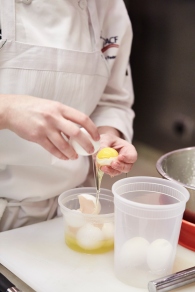
Eggs are considered one
of The Big 8 food allergens.

Here’s some advice to make your restaurant safer for food-allergic guests:

• Communication with guests and staff is critical. Train your front-of-house staff to ask every guest about food allergies and clearly communicate the food allergy to the manager and chef. Kitchen staff should be in constant communication during cooking, plating and serving to prevent cross-contact.

• Create a separate workspace in the kitchen to prepare allergen-free/gluten-free meals. Make certain all work surfaces and equipment are properly cleaned and sanitized.

• Store common food allergens in a separate area of the kitchen.

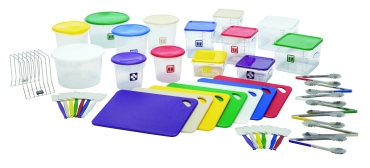
• Utilize color-coded allergy tools to reduce the risk of cross-contact. Purple is the universal color for allergen-free kitchen utensils. Keep these tools clean, covered and stored away from flours, nuts and other common allergens.

Rubbermaid® Commercial Products’ (RCP) Color-Coded Foodservice
System earned the ACF Seal of Approval.

• Use separate fryers for foods that are common allergens.

• Provide accurate information by directing food-allergic guests’ questions to the manager or the head chef. Front-of-house staff should never guess about ingredients or preparation of a dish — this can be a matter of life and death.

• Be aware of multiple and complex allergies. Your team may have mastered cooking and serving a dairy-free or gluten-free meal, but they should also be able to expertly handle multiple and unusual allergies.

• Serve allergen-free/gluten-free meals on different-shaped or different-colored plates so they can be easily identified by servers and guests.

• Educate your entire staff about allergen “aliases” — for instance, whey and casein are dairy products, and semolina contains gluten.

• Modify dishes for food-allergic guests using different sauces, sides or other components to accommodate their special dietary restrictions.

• Train your team on food allergy protocols. There are numerous online classes, webinars, videos and live classes that can assist you with this endeavor.

In 2015, 16-year-old Scott Johnson died after eating two pancakes at a Minnesota diner. Allegedly, staff members confirmed that the flapjacks were dairy-free, and the cook even agreed to clean the grill before making them. There was a mistake somewhere in the diner’s protocol, and the teen accidentally ate dairy in his meal. Shortly after consuming the pancakes, Scott went into anaphylactic shock and died three days later.

Scott Johnson’s death shows why it is imperative that your staff know what ingredients are used in each menu item. One of the most important elements of proper food safety protocol is avoiding cross-contact, a relatively new term, in which proteins from foods containing an allergen are transferred to foods not containing that allergen. Make certain that your staff understands what cross-contact means and how to prevent it.

An example of cross-contact is chopping peanuts on a cutting board and then chopping salad greens on the same board. A peanut-allergic guest can have a reaction from eating the greens that came into contact with the peanuts during prep. Thermometers are also a common source of cross-contact because they are frequently inserted from one food item into another without being properly sanitized. I strongly recommend color-coded thermometers (and other equipment, as well) to designate allergy-friendly tools.

Many people also believe using hand sanitizer is an effective way to manage food allergens. This is not accurate. Experts have proven that antibacterial gels are not effective in removing food proteins. Changing gloves and washing hands with soap and water are two effective methods to eliminate allergen exposure.

It is vital that everyone on your team understands how to properly handle an order for guests with food allergies and intolerances. Consumers are increasingly seeking out establishments where they can dine worry-free, many of them driving an hour or more to eat safely. These establishments will earn brand loyalty increase profitability by catering to these diners.