Translate

Showing posts with label food contamination. Show all posts

Monday, August 22, 2016

Is Your Food Traveling to You Safely?


As I stood in the TSA security line at one of our nation’s airports, I noticed that the person in line behind me had what appeared to be a restaurant food delivery. The items that were being delivered were packaged in bags from a well-known “box store” (which is not an approved food source for restaurant sales), and food products were cascading out of the bags onto the filthy airport conveyor belt.

Granted, as a food safety expert, I’m more observant about these things than the average individual, but everyone around me could see raw vegetables, as well as refrigerated and frozen food products, falling onto the grimy conveyor belt to pass through security. In the process, the foods were being introduced to a variety of contaminants. 

As I watched, horrified, I wondered if anyone would bother to take the temperature of the cold items when they arrived at their final destination.  I could clearly see that the “cold food” products were not being properly refrigerated in transit. The deliveries were being transported in regular grocery bags, not coolers, and there was no way to tell how long the cold food had been in the temperature danger zone of 41°F - 135°F. On this particular day, it was over 90°F outside and quite warm inside the airport.  I could see condensation beading on the outside of all of the refrigerated/frozen containers, demonstrating that the items were thawing in the warm air. Would the restaurant refreeze the thawed foods, after they had been in the temperature danger zone? If so, that would be a food safety nightmare of catastrophic proportions. 

When the restaurant received this delivery, would someone wash the raw vegetables appropriately to rid of the dangerous bacteria they most certainly picked up during their unsanitary transport? 

Unfortunately, I see improper food handling and delivery all the time.  People often use dirty transport carts to transfer products from one area to another. In some instances, the same cart that’s used to transport food is also used to haul garbage to the dumpster! 

Occasionally, deliveries are made at “inconvenient times,” and the food service staff may be too busy to put the items away immediately. In those instances, cold products remain in hallways, parking lots, and unrefrigerated stockrooms, allowing perishable foods to venture into the temperature danger zone – sometimes for extended periods of time. 

Safely transporting and storing food products is tremendously important and cannot be overlooked. Allowing products to be transported in dirty carts or left unattended in hallways, parking lots, or other unprotected areas also leaves the stock exposed to food defense issues. Food defense is the prevention of the intentional contamination of food. In situations such as these, anyone has access to the stock, and could easily sabotage it. 

Being careless with food – putting it on dirty conveyor belts, in filthy transport carts, left unattended or in a sunny parking lot – puts those products at increased risk. While the food safety rules and regulations that are in place can seem a burdensome at times, especially when staff gets busy or distracted, they’re critically important to follow, all the time, with every item of food. Keeping food safe protects the public, as well as your business. While you might concentrate on implementing food safety protocols in your kitchen, avoiding cross-contamination, washing your hands after touching raw poultry, etc., you must also ensure that the food is traveling to you safely. Confirm that your suppliers and delivery personnel are always adhering to safe practices, and not risking the health of your guests – or the success of your business.

Francine L. Shaw is President of Food Safety Training Solutions, Inc., which offers a robust roster of services, including food safety training, food safety inspections, Norovirus policies for employees, Norovirus clean-up procedures, responsible alcohol service training, and more. The Food Safety Training Solutions team has more than 100 combined years of industry experience in restaurants, casinos, and convenience stores. The company has helped numerous clients, including McDonald’s, Subway, Marriott, Domino’s, Girl Scouts and Boy Scouts of America, Dairy Queen, and Omni Hotel and Resorts, prevent foodborne illnesses. Additionally, they work with restaurants of all sizes, schools, medical facilities, convenience stores, hotels and casinos.  Francine has been featured as a food safety expert in numerous media outlets, including the Dr. Oz Show, the Huffington Post and Food Management.

Can your company afford the cost of a foodborne illness? Let Food Safety Training Solutions, Inc. give you piece of mind with routine third party inspections, a customized food safety curriculum, or food safety training classes. The personal and financial risks associated with foodborne illness outbreaks are increasing every day. 

*Original article appeared in TOTAL FOOD SERVICE MAGAZINE August 2016


Wednesday, February 24, 2016

Accommodating Food Allergies: Good for Business and Good for Your Customers!


By Francine L. Shaw CP-FS, CFSM, FSP, FMP   |   fsts.net
An EXCLUSIVE for Convenience Store News  |  Published January 2016


Individuals with food allergies must be properly accommodated across all spectrums of the food service industry. Approximately 230,000 hospitalizations and 200 deaths occur annually because food-allergic individuals accidentally ingested or inhaled their allergens. Make one tiny mistake with “just a trace” of an allergen, and someone could die, literally.

Recently, I was teaching food safety classes for a convenience store chain after they had rolled out barista-style coffee. At one point during class, we were discussing the new products and I discovered they offered a beverage containing soy milk. Later in the day, as we talked about food allergies, I used the soy milk as an example. I remember saying, “It’s great that you have signs with warnings that state: Soy products are served here; therefore, there could be potential contamination.” Everyone in the class looked at me like I was speaking a language they’d never heard. I then said, “You do have a warning statement, don’t you?” Slowly, everyone began to shake their heads no.

Having no signage about food allergens and possible contamination was the first of a series of problems, showing me that these employees were not properly trained to accommodate food-allergic customers. We discussed cleaning procedures for the mixers that were used for multiple beverages, including products with common allergens like peanut butter, dairy and soy, and the employees told me they were just being “spun” in water with sanitizer, not thoroughly cleaned with hot water and soap before being sanitized. Additionally, there was not an assigned mixer for allergen-free products only. This brand had big problems.

During the next break, I called the corporate office to inform them of these oversights. A few hours later, after class, I stopped into another one of their units on the way home. In the short time since I’d reported the problem to corporate, the stores had already posted temporary allergen warning signs. I also noticed that they had labeled the mixers for allergen and allergen-free products. This showed – without a doubt – how valuable an external set of eyes and ears can be. I was delighted to see that the convenience store chain was able to quickly fix their errors and start improving their food allergy protocols. The leadership team was ecstatic that these issues were caught (and resolved) prior to a tragedy.

I’ve had numerous conversations with individuals who (erroneously) believe that cooking oil gets hot enough to “kill the protein” that causes an allergic reaction. This is simply not true. Speaking of cooking oil, don’t use the same fryer or oil for French fries that you use for breaded products, fish or foods containing nuts, as doing so will cause cross-contact for people with gluten, fish or nut allergies. Allergen-free foods must be cooked in clean oil, using separate (clean) prep stations and equipment (cutting boards, knives, pans, etc.)
All food service establishments – including convenience stores – must have procedures in place to ensure safe experiences for food-allergic customers, and must train all employees to always follow these procedures. Here are a few tips to make your stores allergy-friendly:
  • Create a separate workspace in your prep areas to prepare allergen-free products. Make certain you clean and sanitize all work surfaces and equipment.
  • Utilize color coded allergy tools in your kitchens to reduce the risk of cross-contact. Purple is the universal color for allergen-free kitchen utensils. Keep these tools clean and covered.
  • Identify allergen-free products with colored stickers (purple is the color of choice) so they can be easily identified.
  • Make certain all dishware is properly washed, rinsed, and sanitized prior to reuse.
  • Ensure that all employees know the ingredients in every component of every food they serve, including sauces, marinades, sandwich breads, etc. Train them to read and understand ingredient labels.
  • Ensure that your employees know the “aliases” for common allergens – e.g., casein and whey are dairy, semolina is grain, etc.
  • Communicate with your team, and train them on food allergy protocols. There are numerous webinars, videos, and live classes that can assist you with this endeavor. 
It’s critical that everyone on your staff understands the difference between cross-contact and cross-contamination:
  • Cross-contact occurs when an allergen is inadvertently transferred from a food containing an allergen to a food that does not contain the allergen – such as chopping peanuts on a board and then chopping grilled chicken on that same board. The grilled chicken has come into contact with the peanuts, which could trigger an allergic reaction in a guest with peanut allergies. Cooking does not reduce or eliminate the risk of cross-contact.
  • Cross-contamination is a common factor in the cause of foodborne illness. If you place raw chicken on a board, and then chop vegetables on that same board, you risk cross-contamination, spreading bacteria from the raw poultry onto the vegetables. Proper cooking of the contaminated food in most cases will reduce or eliminate the chances of a foodborne illness. 
The main difference between cross-contact and cross-contamination is that anyone can become ill from cross-contamination if they eat foods that have touched raw meats or poultry. Cross-contact is dangerous only for food-allergic guests, who may inadvertently ingest their allergens if proper care wasn’t taken during food prep.
Approximately 15 million Americans have food allergies, including 1 in 13 children. Food allergies among children increased approximately 50% between 1997 and 2011 and no one understands why. Recognized that 25% of people’s first allergic reactions happen outside the home. This issue isn’t going to go away any time soon. Train your staff to recognize the signs of an allergic reaction, and have plan in place in case one occurs at your store. A “small” mistake - such as standing someone up in the midst of an anaphylactic reaction - could be fatal. 

Everyone on your team should know how to handle an order for someone with food allergies. Consumers are seeking out establishments where they can eat worry free. These establishments will earn brand loyalty and, therefore, increase profitability. Wouldn’t it be nice to be recognized as the C-store that consumers with food allergies can eat with confidence?

Tuesday, August 25, 2015

Reduce Up to 99% of Present Pathogens on Your Next Grocery Day

During the 1990’s grocery stores began offering reusable bags in an effort to reduce the environmental costs of plastic and paper grocery bags. The trend caught on and many Americans enjoy the benefits of using them. While ecologically friendly, many people are unaware of the physical dangers of reusable grocery bags if not properly washed. Reusable bags are often made of various plastics, canvas, or woven synthetic fibers - all of which can transfer harmful bacteria to contents if they not properly cleaned and maintained.
These bags are typically taken to the market time after time filled with everything from raw beef and poultry to ready-to-eat foods such as heads of lettuce or apples. Washing the reusable bags after use can eliminate harmful pathogens such as E.coli or Salmonella by 99.9% according to *STOP Foodborne Illness.

The Breakdown
• Reusable grocery bags are bags made of plastic, canvas, or woven synthetic fibers.
• Beginning in the 1990’s, supermarkets began offering reusable grocery bags in an effort to reduce the environmental costs of plastic and paper grocery bags.
• Reusable grocery bags tend to go unwashed after carrying raw meat products and have been linked to an increase in E. coli infections.
• By washing reusable bags either by hand or in a washing machine after use, present pathogens can be eliminated by 99.9%.
This principal also applies to other areas that will come into contact with your food. Lunch boxes, for example, should also be washed after every use. Another common mistake is to wash poultry in the kitchen sink, spreading harmful bacteria to large areas around and in the sink - potentially causing contamination. There is no need to rinse your poultry. When poultry is cooked to a temperature of 165⁰F or higher, the bacteria is reduced to levels that make the poultry safe to consume.

A few food safety tips for a healthy home:
·       The temperature of the refrigerator in your kitchen should be kept at 37⁰F-38⁰F. This will keep your cold food temperatures around the recommended 41⁰F or below. 
·       After you open a product, such as lunchmeat or potato salad, be certain to store it for seven days or less. The day you open the product is counted as day one. After seven days the potential exists for enough bacteria growth to make you ill. If the temperature of your refrigeration unit is off by even one or two degrees it is going to affect the safety of your food.
·       Clean the aerator on your kitchen faucet. Your spigot in your kitchen is typically the dirtiest in the house. Is this where you rinse fill your mop bucket AND rinse your vegetables? YUCK!
·       Don’t use sponges in your kitchen, as they harbor potentially harmful bacteria such as E.coli and Salmonella.


*STOP Foodborne Illness is a national nonprofit public health organization dedicated to the prevention of illness and death from foodborne illness by advocating for sound public policy, building public awareness, and assisting those impacted by foodborne illness.

• STOP believes that reusable grocery bags are not a problem in themselves; it is the lack of consumer education on how to properly use them that causes foodborne illness.
• STOP encourages educating consumers on the risks of spreading pathogens through reusable bags and producing reusable bags with a clearly visible message and instructions to wash reusable bags after each use. This simple act could greatly reduce the illnesses spread through bags while maintaining the environmental agenda.

Tuesday, February 17, 2015

Monitor Food Safety While Staying Heart Healthy


PURCHASING

Be selective.
Do not purchase bruised or damaged produce - whether it’s on sale or not!

If purchasing pre-cut produce — such as a sliced cantaloupe or bagged salad greens — choose only those items that are kept cold i.e. refrigerated, packed in ice.

Fresh fruits and vegetables must be bagged separately from meat, poultry and seafood products when packing them to take home. This is a sure way to cause illness. Cross-contamination is bound to happen if these items are bagged together.


STORAGE

Did you know that proper storage could affect quality and safety?

Store fresh fruits and vegetables (like strawberries, lettuce, herbs, and mushrooms) in a clean refrigerator at a temperature of 41°F (5°C) or below. There shouldn’t be any mold or unidentifiable objects in your refrigerator. These things are spreading contamination, get rid of them!

All produce that is purchased pre-cut or peeled must be refrigerated to maintain both quality and safety.


SEPARATE

Fruits and vegetables that will be eaten raw must be kept separate from other foods such as raw meat, poultry or seafood — and from kitchen utensils used for those products. If not cross-contamination is likely to occur. Here are a few food safety precautions:

Wash cutting boards, dishes, utensils and counter tops with soap and hot water between the preparation of raw meat, poultry and seafood products and the preparation of produce that will not be cooked.


If you use plastic or other non-porous cutting boards, run them through the dishwasher after use.

PREPARATION

When preparing fresh produce, start with clean hands. Wash your hands for at least 20 seconds with soap and warm water 100°F (38°C) before and after preparation.

Remove any and all damaged or bruised areas on fresh fruits and vegetables before preparing and/or eating. Produce that looks spoiled must be discarded.

Wash all produce thoroughly under running water before eating, cutting or cooking. This includes produce grown conventionally or organically at home, or purchased from a grocery store or farmer’s market. Using soap, detergent or commercial produce washes is not recommended.

Whether or  not you plan to peel the produce before consuming, it is still important to wash it first so dirt and bacteria aren’t transferred from the utensil onto the food product. Melons and cucumbers and other firm veggies should be scrubbed with a clean produce brush.

Dry product with a clean paper towel to remove any remaining bacteria that may be present.

Of course eating fruits and vegetables is not the only thing that will help you maintain a healthy heart. A well balanced diet and exercise are part of the plan as well. And, I would be totally remiss if I didn’t mention that while a happy healthy heart is our number one goal - if you are lying on the floor beside the toilet and it’s because your forgot to wash your veggies; your happy healthy heart is going to feel very, very sad. 

We at Food Safety Training Solutions, Inc. wish you a lifetime of love with a healthy heart.


Wednesday, December 17, 2014

Food Allergies in Schools - Part 2 of the Allergy Series


As a growing food safety and public health concern, potentially life-threatening food allergies affect between 4% and 6% of children in the U.S. The ordeal goes beyond the child with the allergy, effecting their families, schools and early child education programs. Having a plan of action and communication between families and staff could help to prevent allergic reactions and prepare them to handle emergencies.

What is a food allergy?

When the body has a specific immune response to certain foods that can multiply, this can be defined as a food allergy. The immune response can be severe and life threatening, or even lead to anaphylaxis. Normally the immune system protects us from germs, however in those with food allergies it incorrectly responds as if the food was harmful.


Eight foods account for 90% of serious allergic reactions in the U.S.


Symptoms of Allergic Reactions in Children

While symptoms and severity of reactions to food can vary between individuals, they can also different for one person over time. If a child with food allergies is having a reaction, they may talk about the following symptoms:

   It feels like something is poking my tongue.
   My tongue (or mouth) is tingling (or burning).
   My tongue (or mouth) itches.
   My tongue feels like there is hair on it.
   My mouth feels funny.
   There’s a frog in my throat; there’s something stuck in my throat.
   My tongue feels full (or heavy).
   My lips feel tight.
   It feels like there are bugs in there (to describe itchy ears).
   It (my throat) feels thick
   It feels like a bump is on the back of my tongue (throat).


Treatment and Prevention of Food Allergies in Children

Unfortunately, there is no cure for food allergies. The only way to avoid symptoms or an emergency is to avoid the allergen. While it is not always easy to avoid certain foods, school and ECE programs should have a plan of action in place to handle allergic reactions and anaphylaxis. Early and fast recognition of allergic reactions that may lead to anaphylaxis can prevent a tragedy.


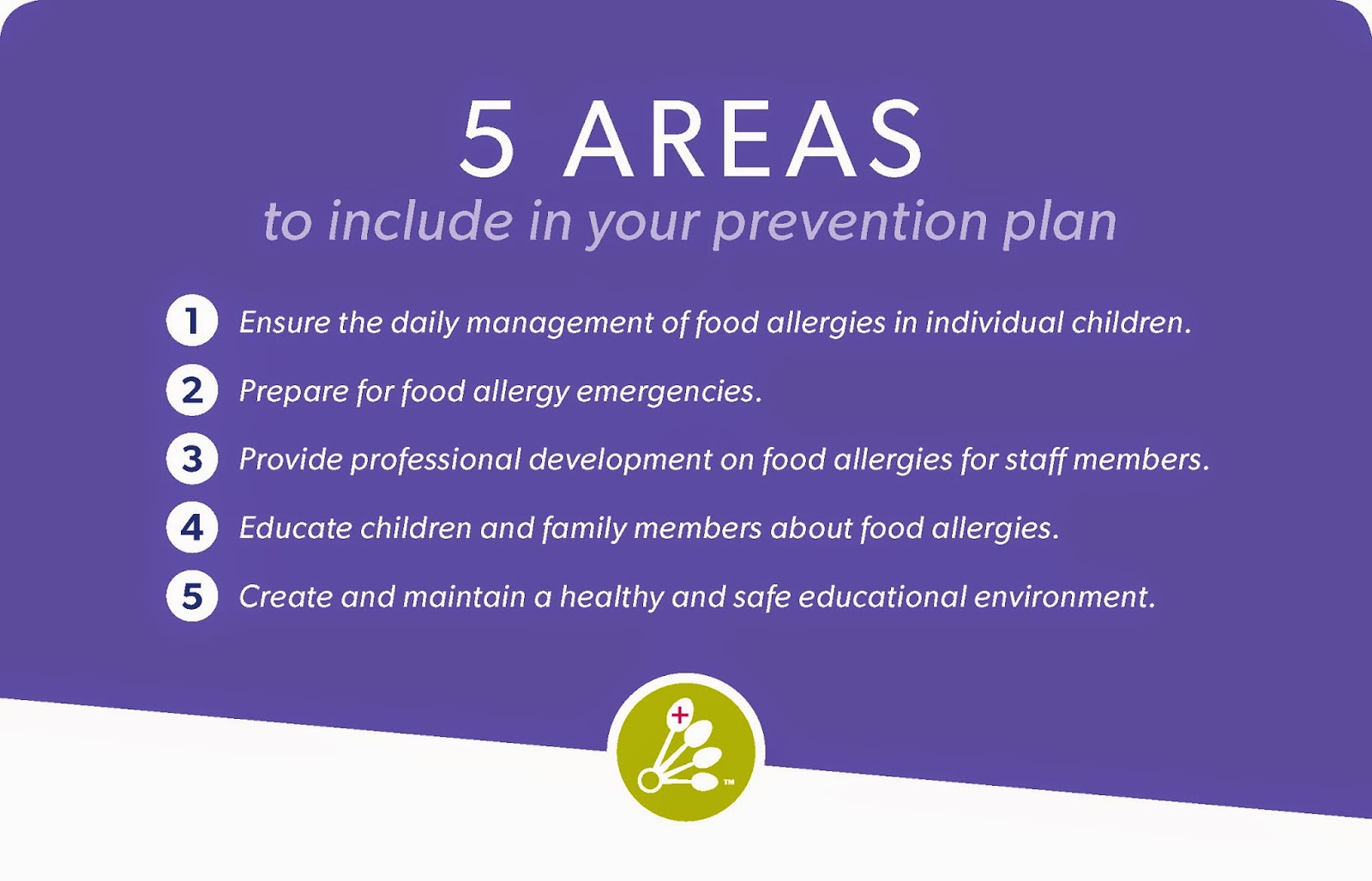
Voluntary Guideline for Managing Food Allergies in Schools and Early Care and Education Programs

In collaboration with the U.S. Department of Education and federal agencies, CDC developed guidelines for managing food allergies in schools and early care and education centers. This provides information and planning steps for parents, district administrators, school administrators and staff.